

How to Leverage AI to Supercharge Agile Project Management in 2025
-
Home
-
Agile Management
-
How to Leverage AI to Supercharge Agile Project Management in 2025

How to Leverage AI to Supercharge Agile Project Management in 2025
Discover how AI transforms Agile project management in 2025. Learn AI tools, strategies, and use cases to boost productivity and deliver smarter.

Table of Content
-
The Convergence of AI and Agile
-
Understanding the Role of AI in Agile
-
AI-Driven Sprint Planning: Smarter Starts
-
AI in Daily Stand-Ups: Virtual Scrum Masters
-
Smarter Backlog Management with AI
-
Enhancing Team Collaboration & Communication
-
Risk Mitigation and Early Warning Systems
-
Continuous Feedback & Learning Loops
-
Personalizing the Agile Experience
-
Ethical Use of AI in Agile Environments
-
Future Outlook: What to Expect by 2025 and Beyond
-
Let AI Augment, Not Replace
-
Take Your Agile Career to the Next Level

The Convergence of AI and Agile
In today’s dynamic and data-driven work environment, Agile project management is no longer just about sprints, stand-ups, and story points. The rise of Artificial Intelligence (AI) has added a revolutionary twist, transforming how Agile teams plan, collaborate, and deliver value. From intelligent task prediction to sprint optimization, AI isn't just a helpful assistant—it's becoming an essential partner in delivering faster, smarter, and more adaptive projects.
Why it matters: By 2025, AI will be deeply embedded in project management tools, workflows, and decision-making systems. According to a report by PMI (2023), over 81% of high-performing organizations already use AI-powered project tools.
This article explores how to strategically leverage AI in Agile environments to boost productivity, improve team morale, and ensure consistent delivery of high-impact results.
1. Understanding the Role of AI in Agile
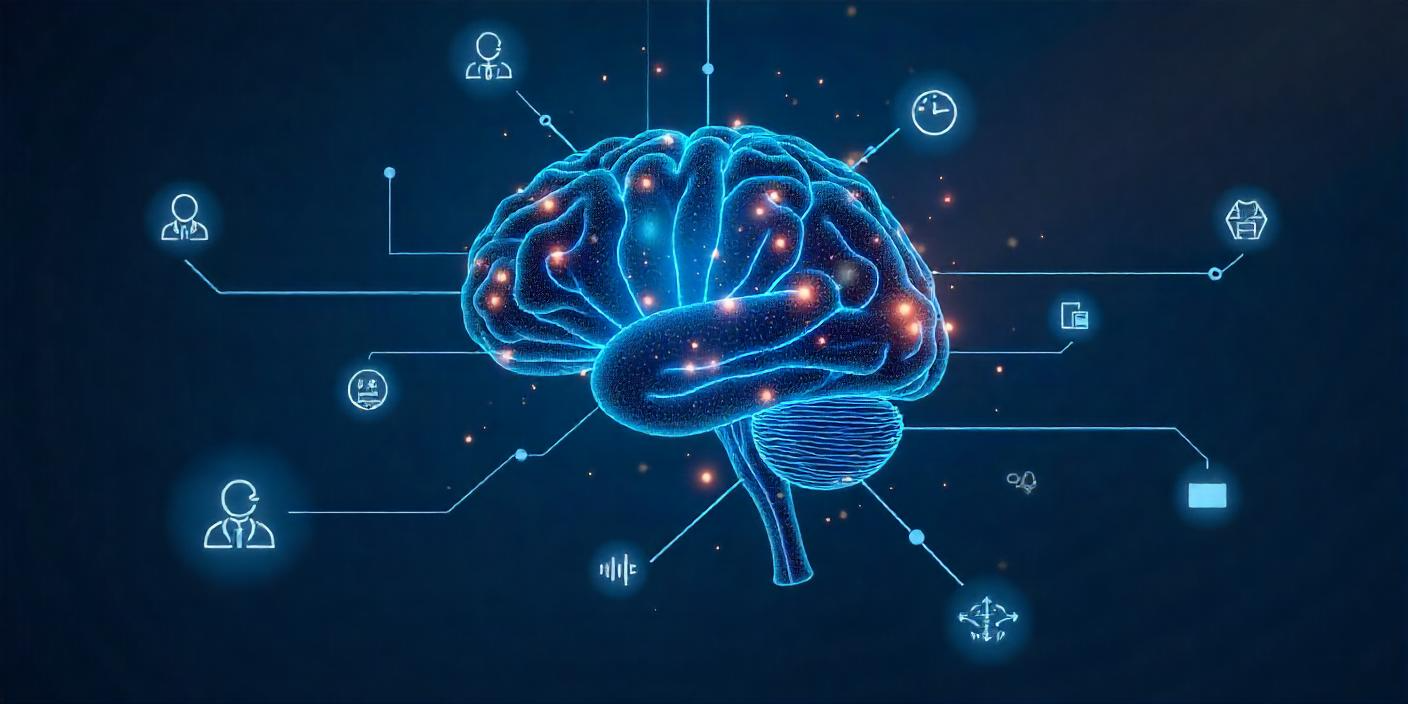
Agile emphasizes adaptability, collaboration, and iterative delivery. But managing daily stand-ups, tracking backlogs, managing priorities, and optimizing velocity can be resource-intensive. Here's where AI steps in to automate, augment, and accelerate Agile workflows.
AI in Agile Means:
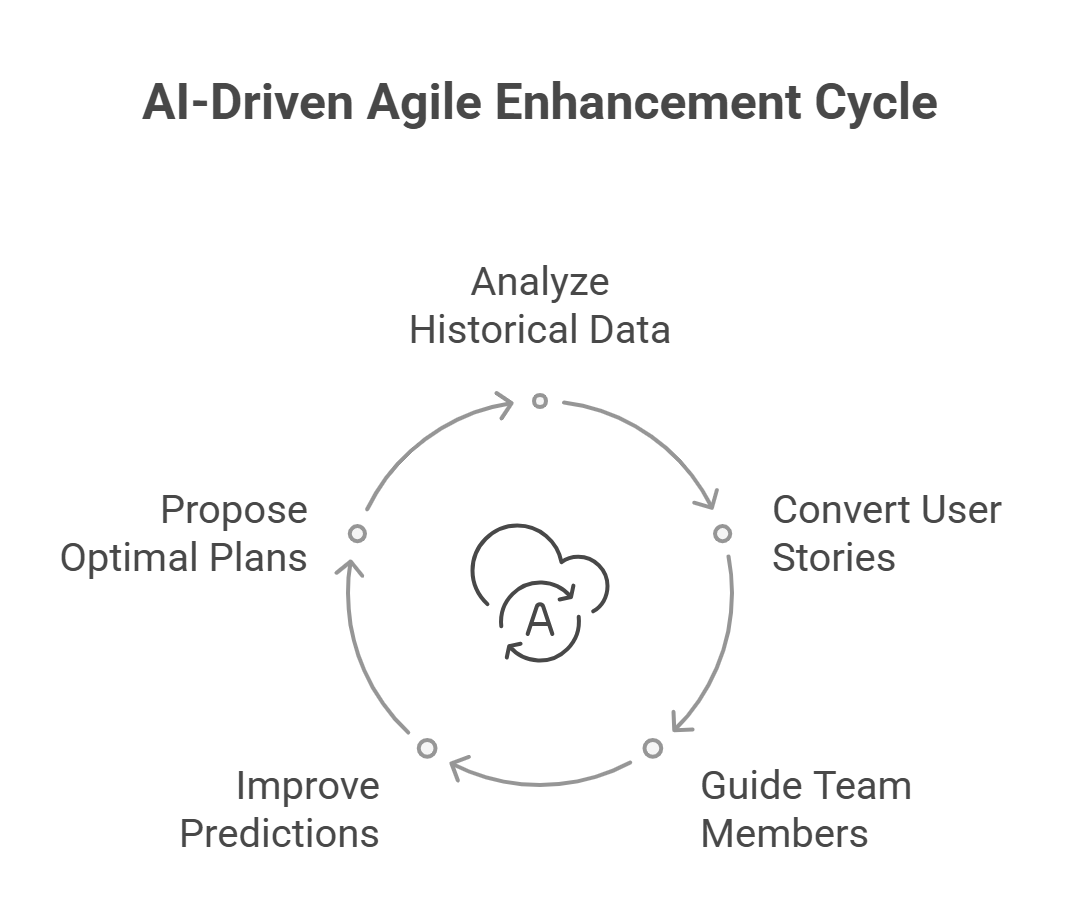
- Predictive analytics that analyze historical sprint data to provide accurate forecasts and risk projections.
- Natural Language Processing (NLP) that converts user stories and bug reports into actionable tasks.
- Chatbots and virtual assistants that guide team members through the project lifecycle, answering questions and automating routine communication.
- Machine learning models that adapt and improve sprint performance predictions over time.
- Recommendation engines that propose priority tasks, optimal workload distributions, and resource utilization plans.
AI’s goal in Agile isn’t to replace people—it’s to empower them by reducing mundane tasks, providing timely insights, and enhancing collaboration.
2. AI-Driven Sprint Planning: Smarter Starts
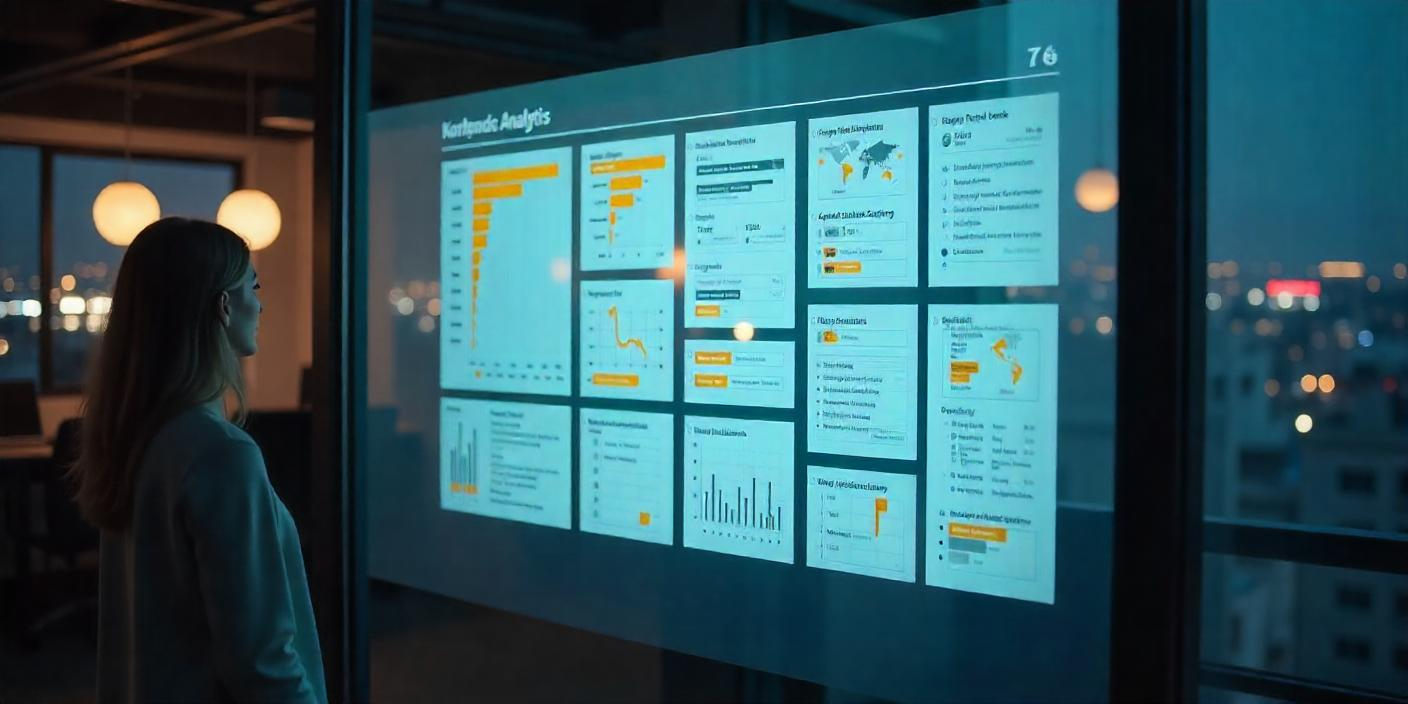
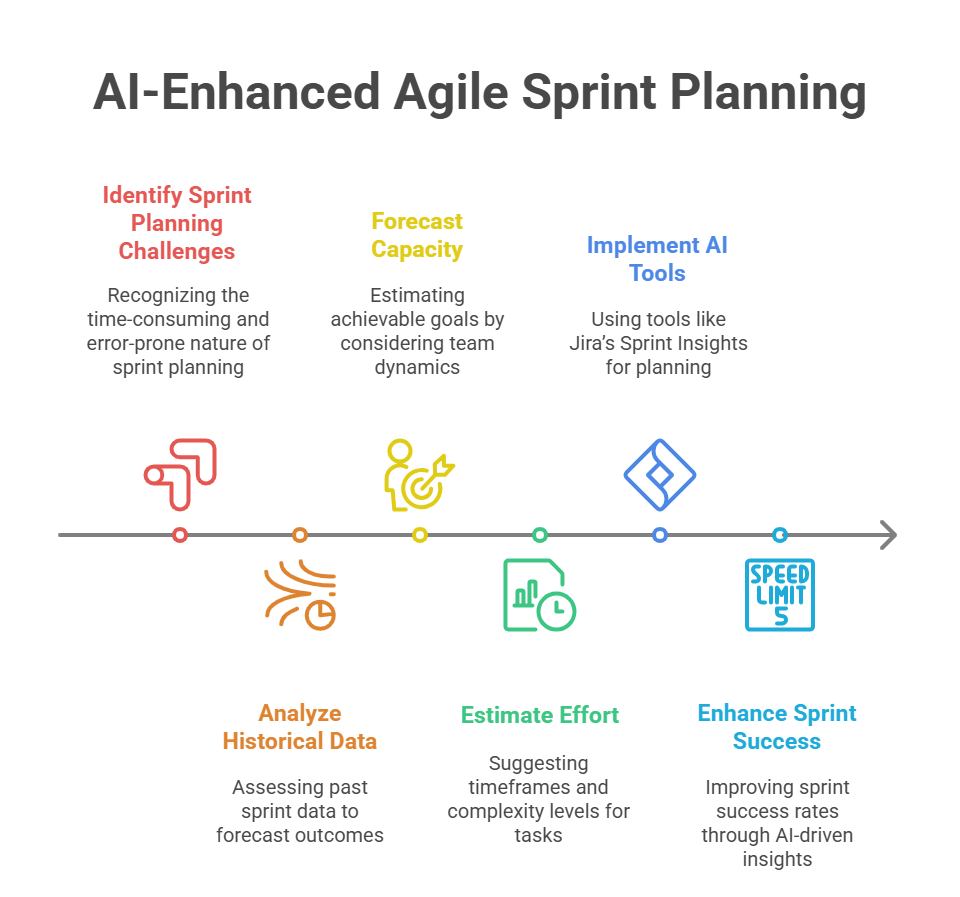
One of the most time-consuming and error-prone aspects of Agile is sprint planning. AI helps teams predict story completion times, assign tasks based on team velocity, and adjust capacity planning in real time.
How AI Improves Sprint Planning:
- Historical Data Analysis: It assesses data from past sprints, including velocity, team member performance, and blocker history, to forecast more accurate sprint outcomes.
- Smart Capacity Forecasting: AI accounts for team dynamics, planned time off, workload history, and team morale to estimate achievable goals.
- Effort Estimation Tools: AI models review similar tasks from prior projects to suggest timeframes and complexity levels with greater precision.
Tool Example: Jira’s AI-powered Sprint Insights offers intelligent backlog grooming and sprint planning recommendations based on historical project data. It eliminates guesswork and enhances sprint success rates.
3. AI in Daily Stand-Ups: Virtual Scrum Masters
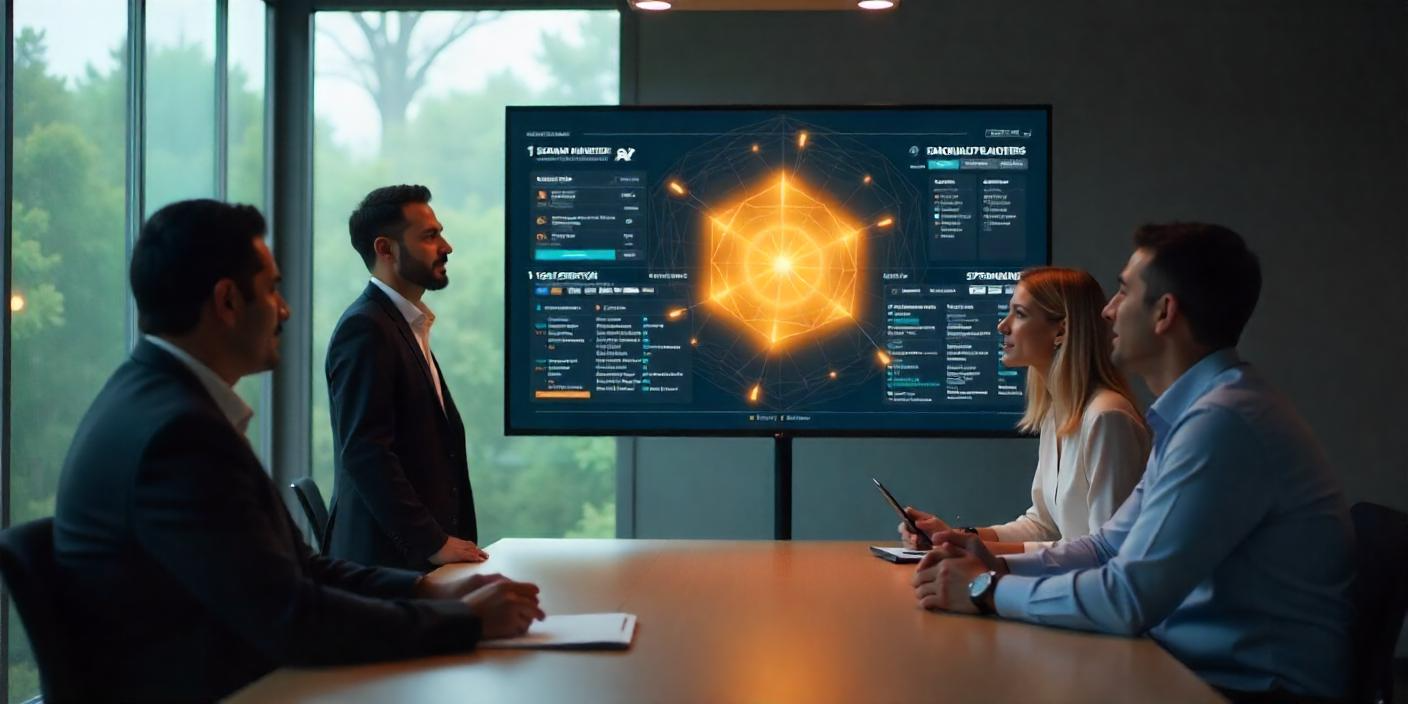
Imagine starting your day with a dashboard that summarizes blockers, predicts which tasks are at risk, and even suggests who might be overloaded. Virtual Scrum Masters are AI-powered tools that make this possible.
Virtual Scrum Masters:
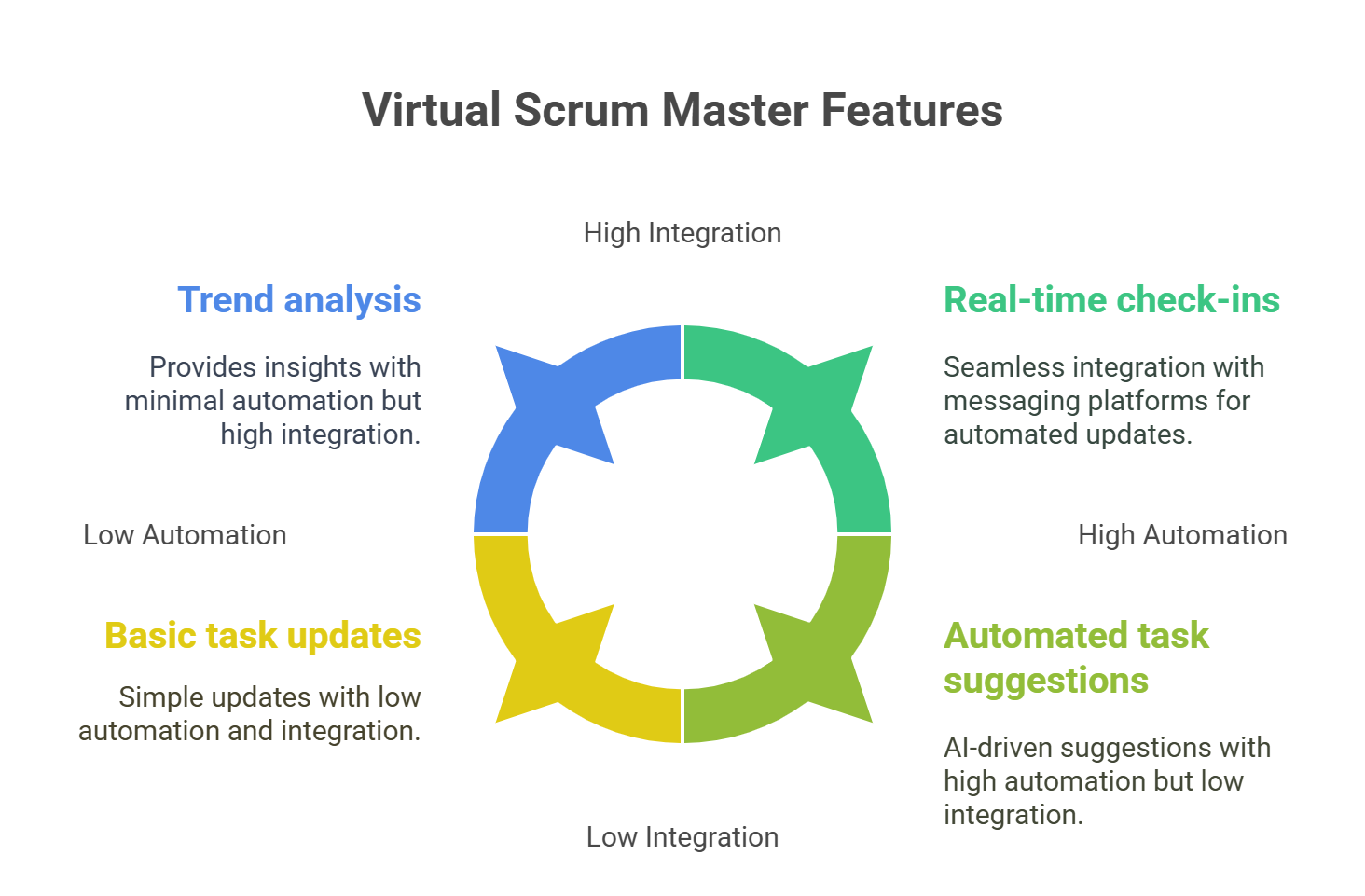
- Auto-generate daily updates, highlighting progress, blockers, and unassigned tasks.
- Offer recommendations to balance task loads and ensure timely delivery.
- Integrate with messaging platforms like Slack, MS Teams, or Discord to provide real-time check-ins.
- Provide trend analysis on team engagement, work completion rates, and sprint velocity.
Tool Example: Standuply automates daily stand-up meetings using Slack or Teams. It uses NLP to understand updates and turn them into actionable summaries that enhance team alignment.
4. Smarter Backlog Management with AI

Managing a product backlog is like managing a living document—it changes fast and often. AI helps streamline, prioritize, and refine this evolving list.
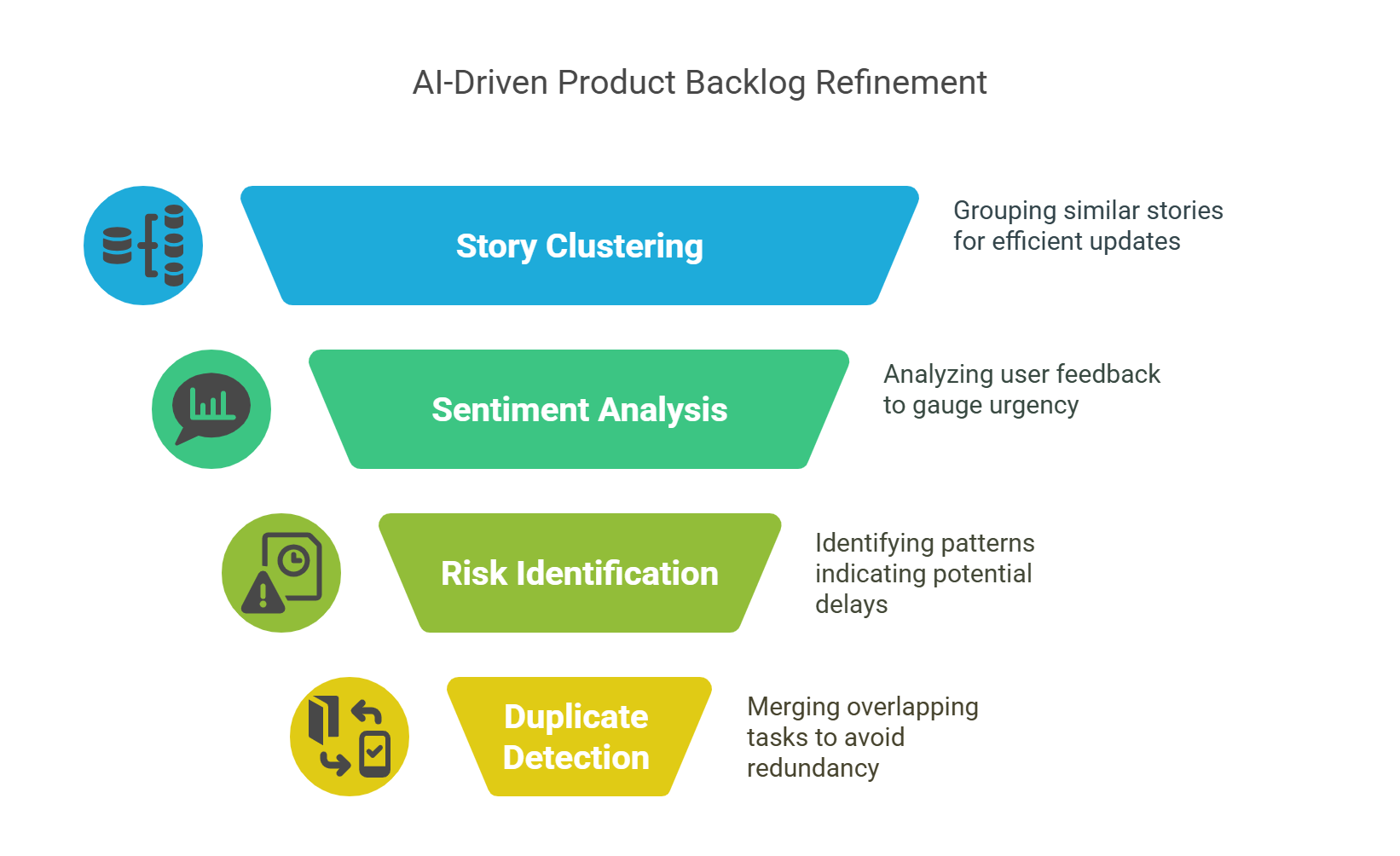
Features Enabled by AI:
- Story Clustering: Groups similar user stories together, simplifying bulk updates and strategic planning.
- Sentiment Analysis: Reviews user comments, reviews, and bug reports to detect the urgency and emotional tone.
- Risk Identification: Monitors backlog items for patterns indicating recurring delays, helping teams avoid future bottlenecks.
- Duplicate Detection: Finds and merges overlapping tasks or features.
AI allows product owners to be more strategic by using data to prioritize the highest value items, reducing bias and improving decision-making.
5. Enhancing Team Collaboration & Communication

Agile thrives on communication. AI tools today go beyond task tracking to improve the quality and efficiency of team interactions.
AI-Powered Collaboration Enhancements:
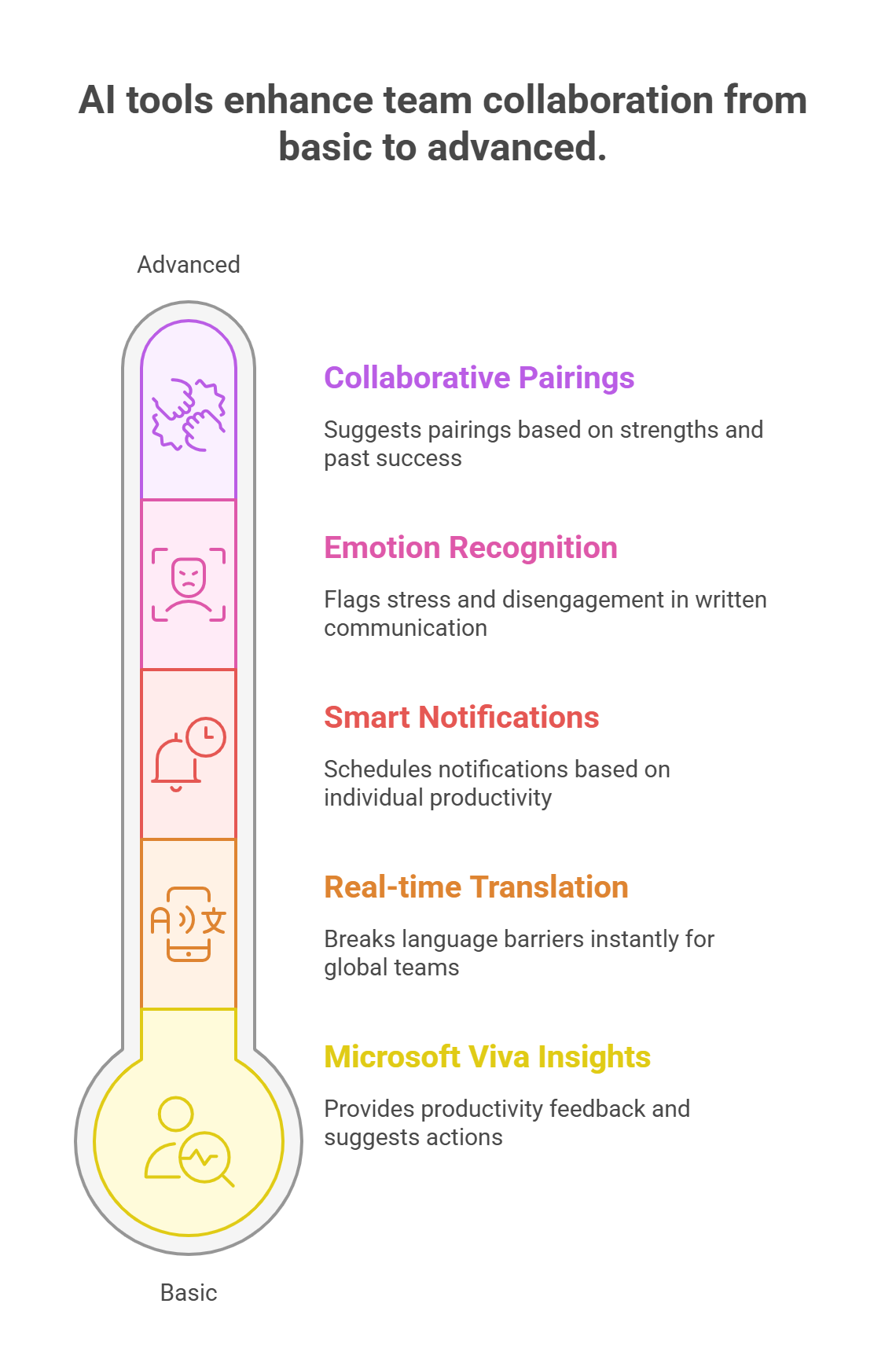
- Real-time translation tools for globally distributed teams, breaking language barriers instantly.
- Smart notifications that are scheduled based on when individuals are most productive or free.
- Emotion recognition in written communication to flag stress, frustration, or disengagement.
- Suggesting collaborative pairings based on strengths and past successful teamwork.
Example: Microsoft Viva Insights leverages AI to provide personal productivity feedback and suggests actions to prevent overwork, improve communication, and boost engagement.
6. Risk Mitigation and Early Warning Systems
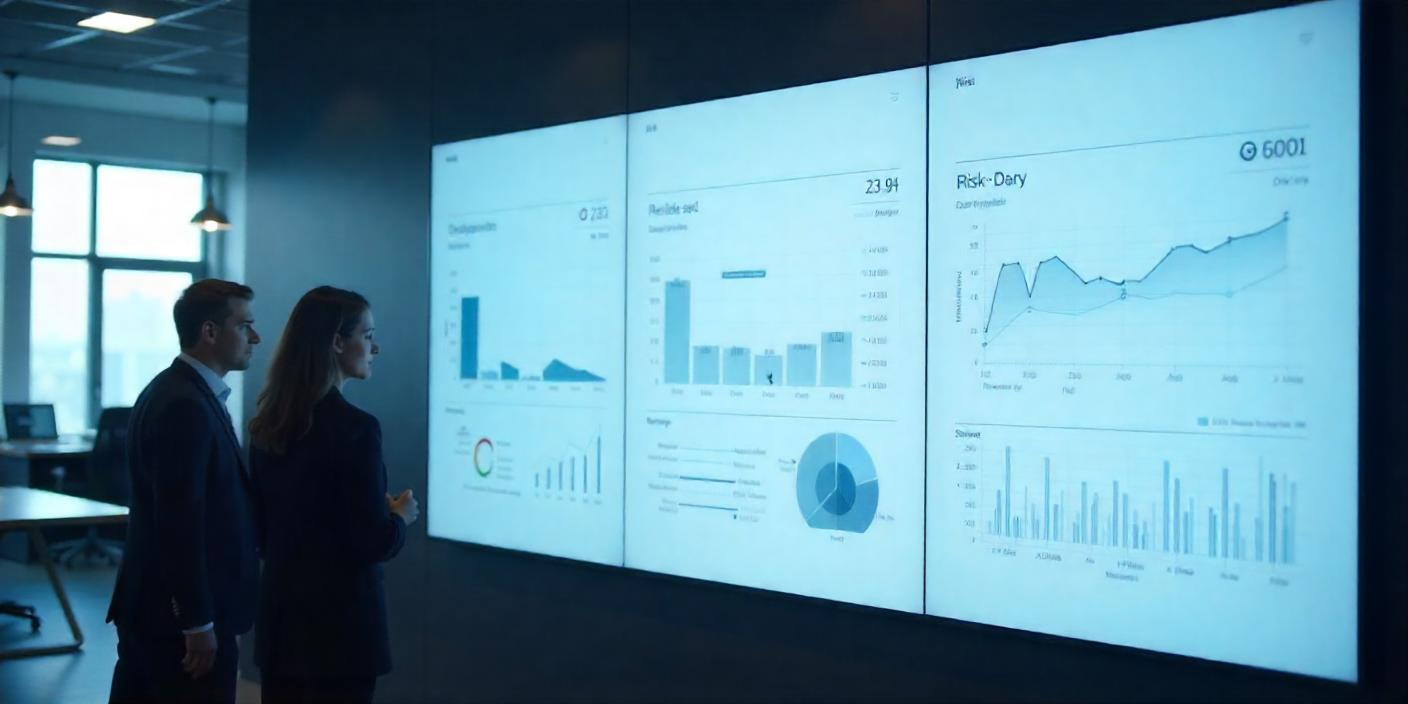
Agile projects often face scope creep, missed deadlines, or misaligned expectations. AI introduces early warning systems that flag potential issues before they escalate.
How AI Helps:
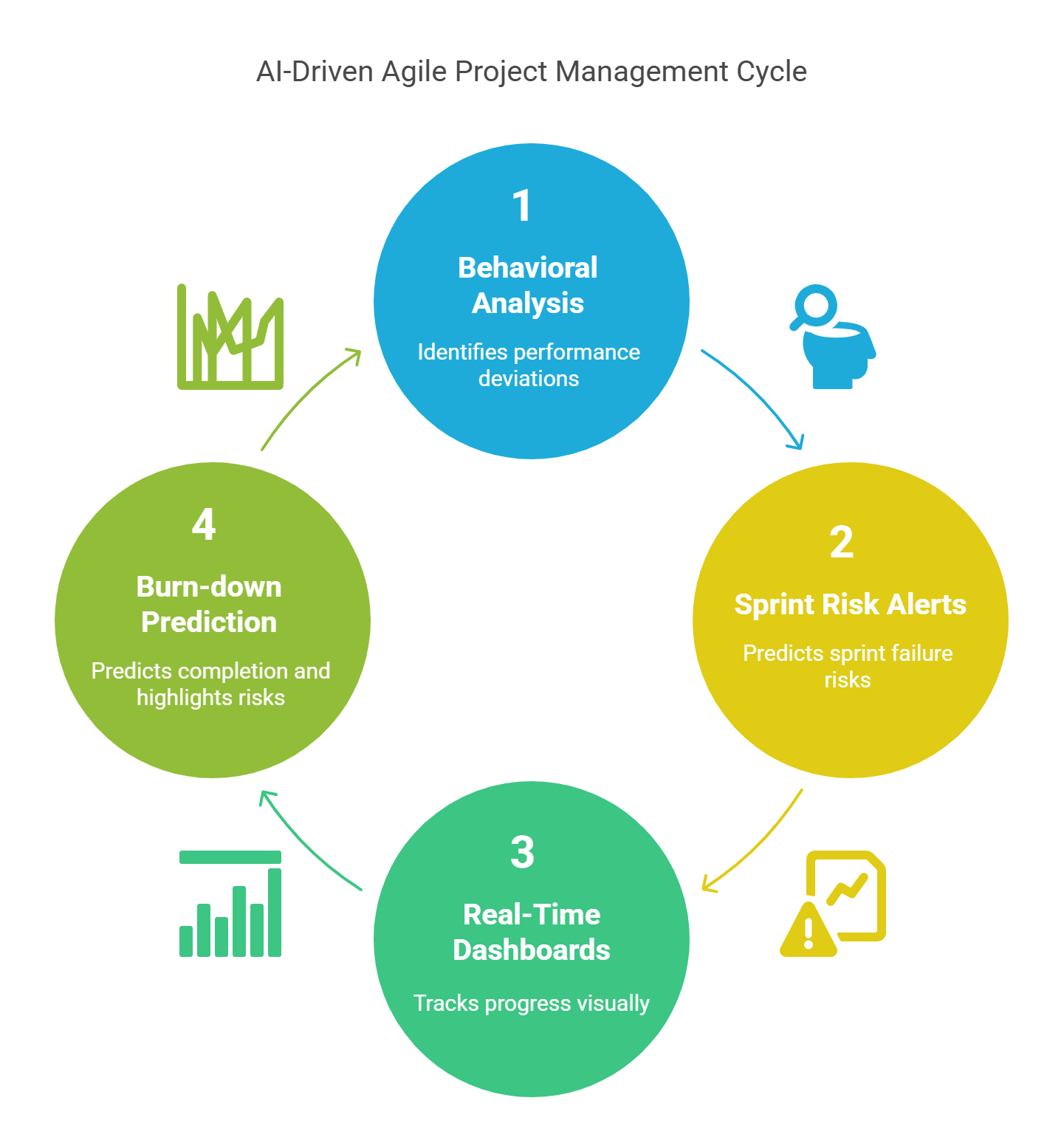
- Behavioral Analysis: Recognizes when a team member’s performance pattern deviates from the norm.
- Sprint Risk Alerts: Predicts sprint failure risks using historical velocity, scope changes, and resource availability.
- Real-Time Dashboards: Track progress against deliverables using AI-powered visual cues.
- Burn-down Prediction Models: Predicts the end-of-sprint completion and highlights at-risk areas.
Scrum Masters and Product Owners benefit immensely from these tools to proactively manage challenges rather than reacting late.
7. Continuous Feedback & Learning Loops

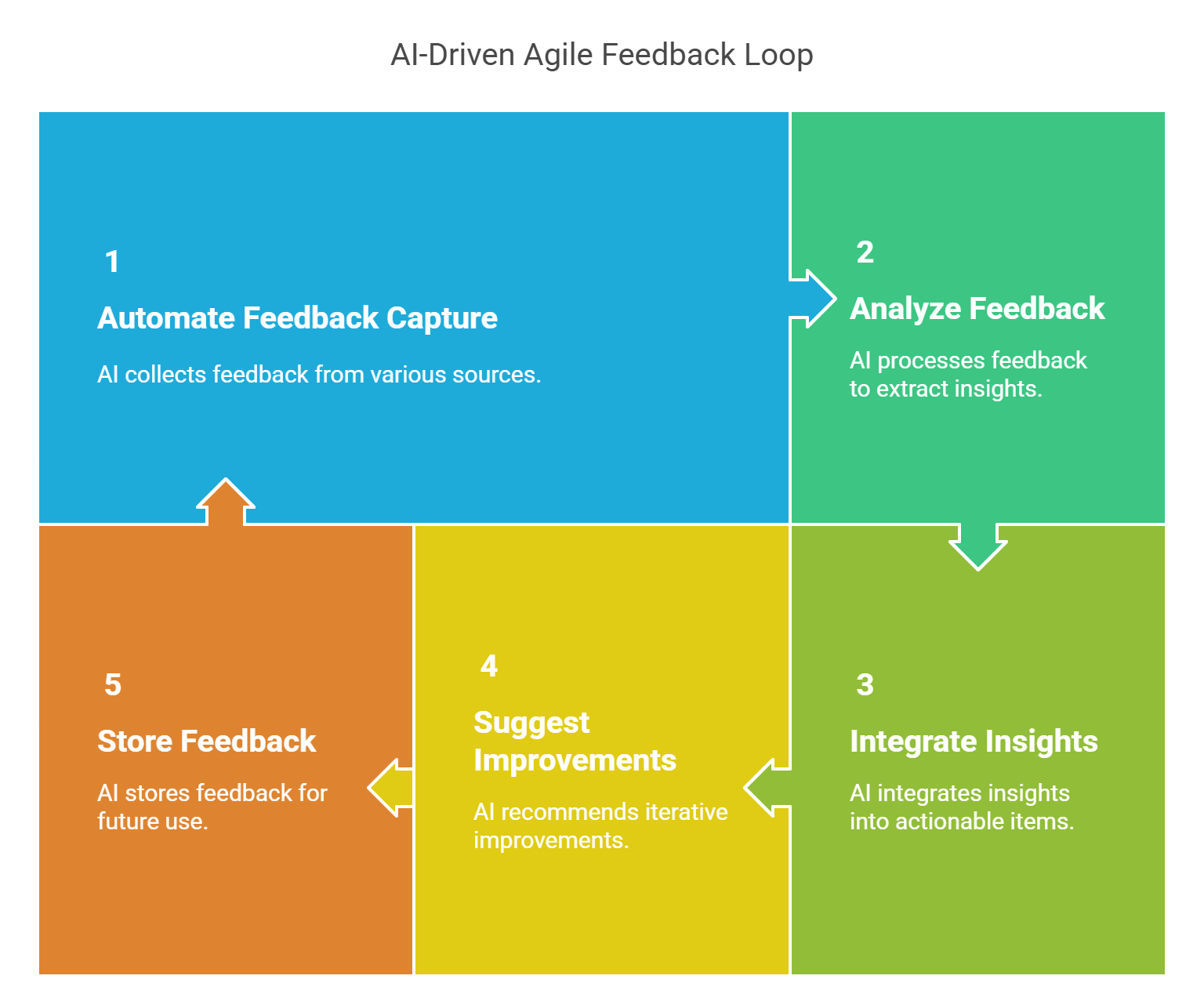
Feedback loops are core to Agile. AI boosts this loop by automating the capture, analysis, and integration of feedback from multiple sources.
What This Looks Like:
- Auto-summarization of retrospectives and team discussions to track action items.
- Stakeholder Feedback Analysis: Uses NLP to extract insights from customer reviews, team surveys, and end-user reports.
- Recommendation Engines: Suggests iterative improvements and process refinements.
- Learning Repositories: Stores past feedback and makes it searchable for future projects.
This ensures feedback becomes a catalyst for improvement—not just a discussion point.
8. Personalizing the Agile Experience

Each Agile team is different. AI allows for custom experiences based on roles, preferences, and working styles.
Personalization Examples:
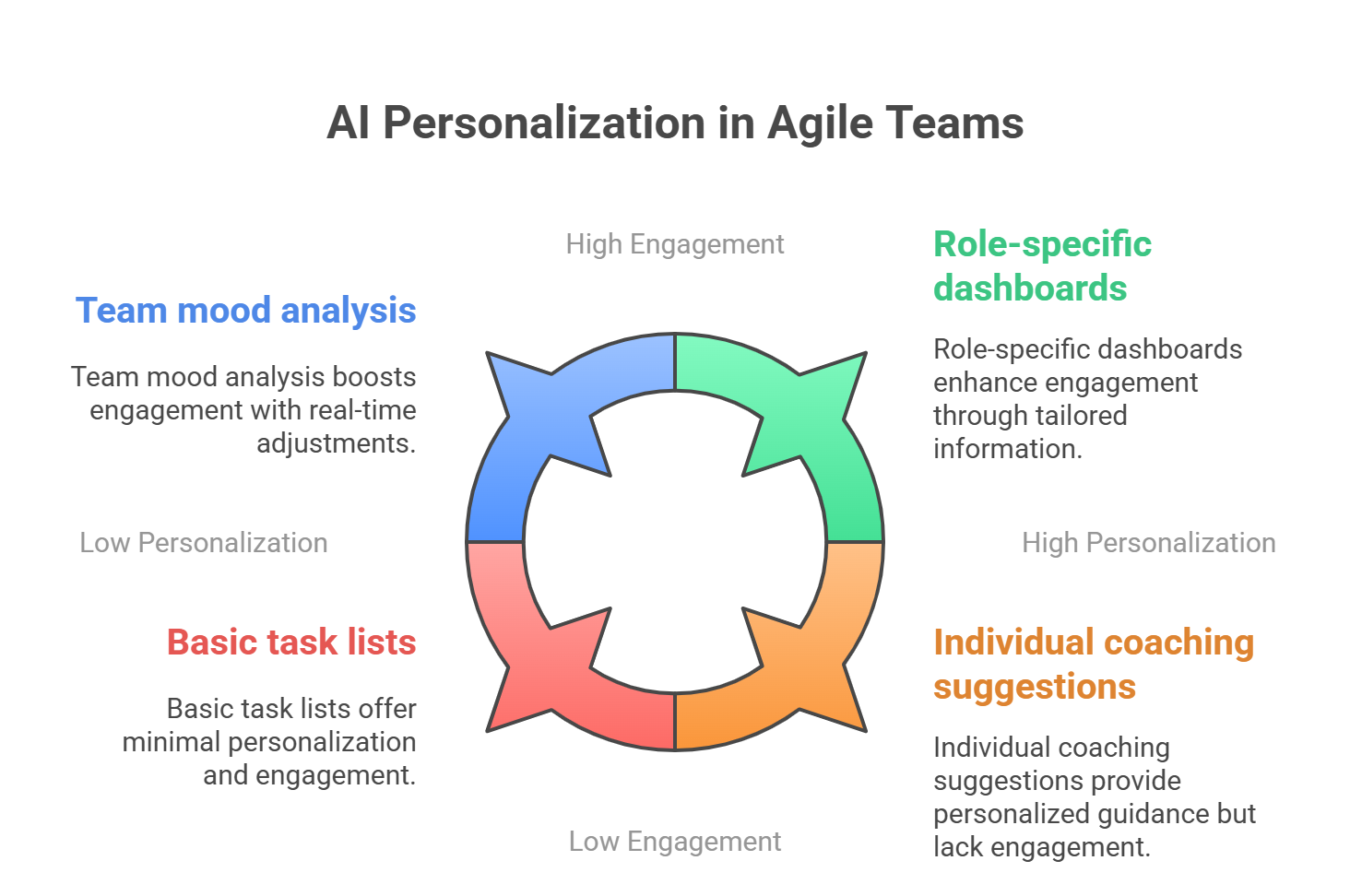
- Role-specific dashboards that surface relevant KPIs and task statuses.
- Individual coaching suggestions from AI based on work history and growth areas.
- Dynamic task prioritization based on individual productivity patterns.
- Team mood analysis to adjust workloads or schedules in real-time.
When AI personalizes Agile tools, teams become more engaged and empowered to work at their best pace and style.
9. Ethical Use of AI in Agile Environments

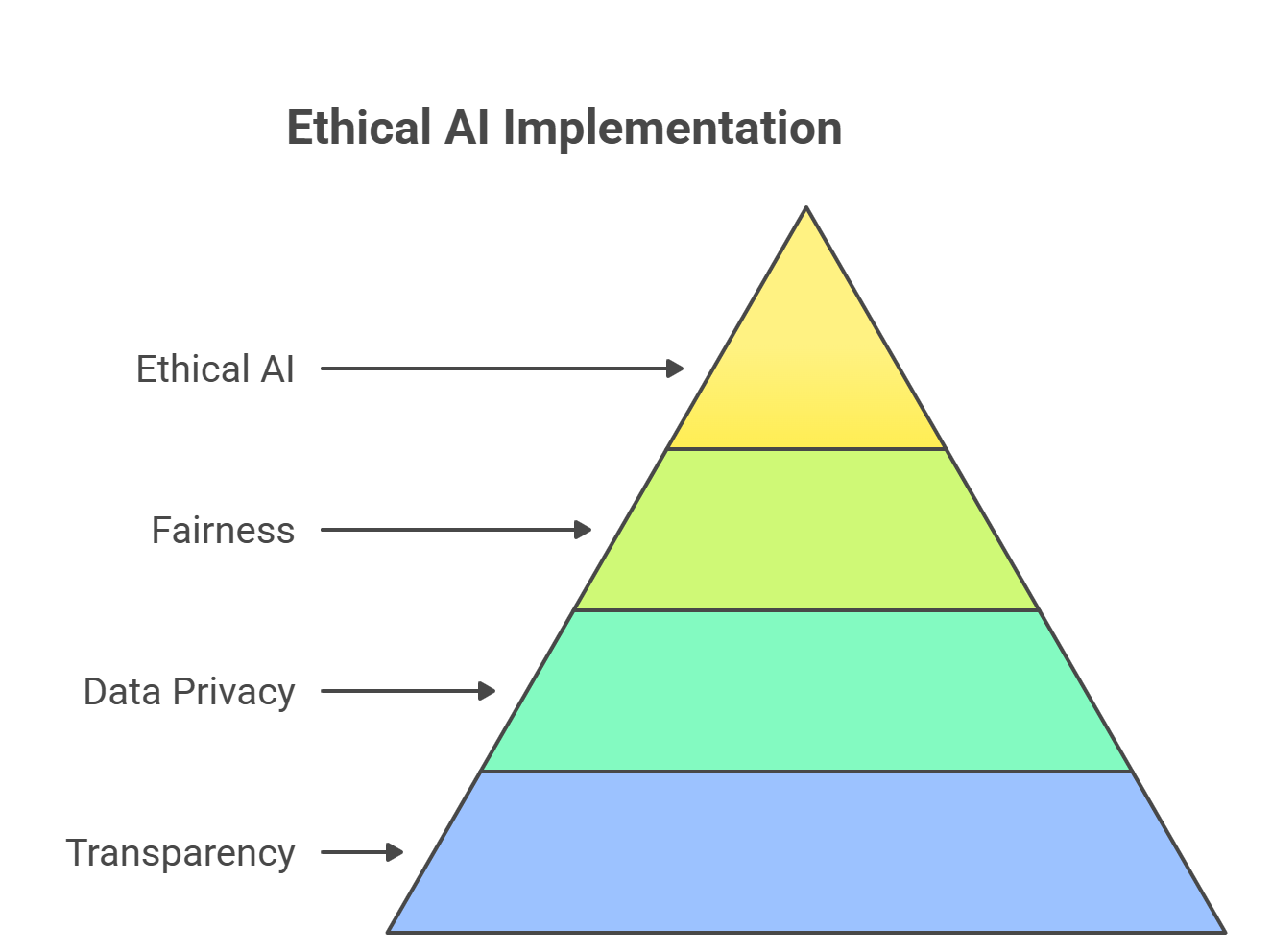
With great power comes great responsibility. AI must be used ethically, ensuring transparency, data privacy, and fairness.
Best Practices:
- Be transparent about how AI makes decisions or offers recommendations.
- Avoid using AI for surveillance or performance micromanagement.
- Ensure opt-in participation when monitoring productivity.
- Use anonymized and consented data for training models.
- Build AI systems that align with Agile’s core principles of collaboration, trust, and autonomy.
Ethical AI fosters trust among team members and enhances adoption and effectiveness.
10. Future Outlook: What to Expect by 2025 and Beyond

The synergy between AI and Agile will only grow stronger. Expect tools to become more predictive, prescriptive, and autonomous.
What’s Coming:
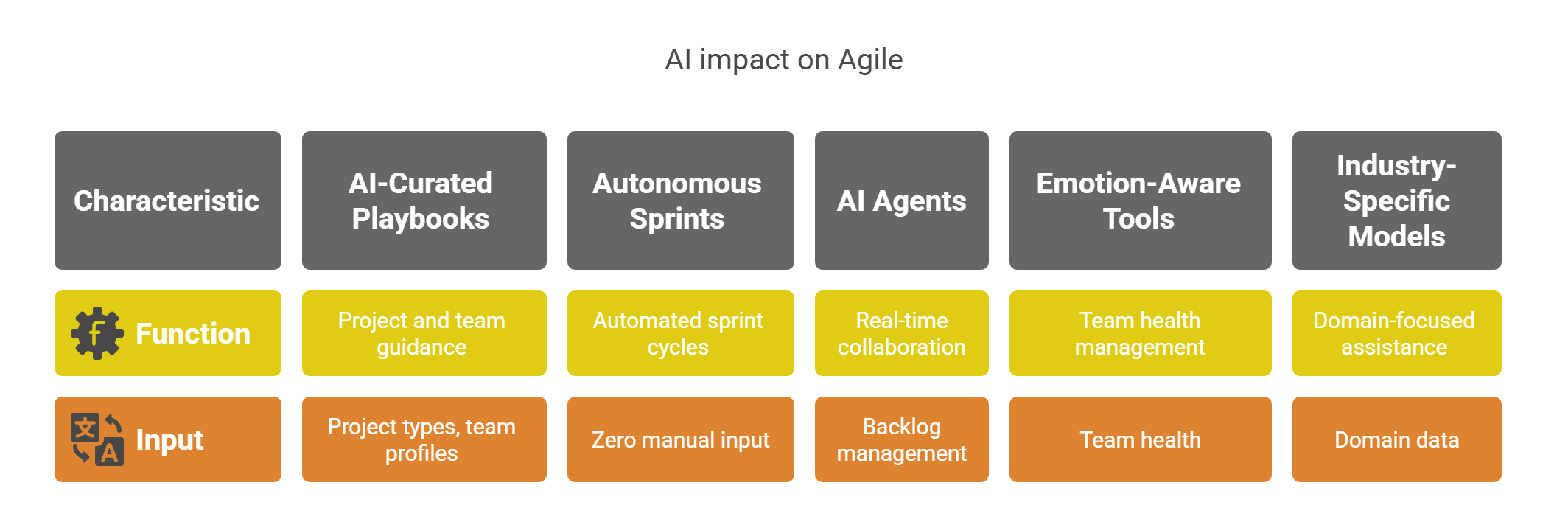
- AI-curated Agile playbooks based on project types and team profiles.
- Autonomous sprint planning and retrospectives with zero manual input.
- AI agents that act as real-time collaborators for backlog management.
- Emotion-aware Agile tools that help manage team health and resilience.
- Industry-specific Agile AI models trained on domain data (e.g., software, healthcare, finance).
In the next few years, AI will not only assist Agile teams but will also become an intelligent layer that guides, optimizes, and evolves Agile practices continuously.
Let AI Augment, Not Replace

AI in Agile is about working smarter, not harder. When leveraged correctly, AI helps Agile teams stay adaptive, focused, and value-driven. It enhances transparency, boosts morale, and supercharges delivery.
But remember: Agile is people-first. AI is a tool, not a replacement.
By embracing AI strategically, teams can unlock a new level of agility that blends the best of human creativity with the power of machine intelligence.
Take Your Agile Career to the Next Level

Want to become an expert in AI-driven Agile management?
Join our comprehensive Agile Project Management Course and learn how to integrate AI tools, lead adaptive teams, and build future-ready workflows. Whether you're a project manager, scrum master, or team lead, this course is your gateway to the next generation of Agile.
Start your journey today and future-proof your career.
Written By
Critical Legal Writer Intern at BISJHINTUS, English Honours (Gold Medalist) / LL.B.

Designed By
UI/UX Designer at BISJHINTUS

Share this post:
Leave a comment
Your email address will not be published. Required fields are marked *
Write a Review
Related Posts

Discover the key differences between Scrum and Kanban in Agile project management. Learn the top 7 p...

Discover the top 5 Agile project management strategies for 2025. Learn how to lead digital teams wit...
